


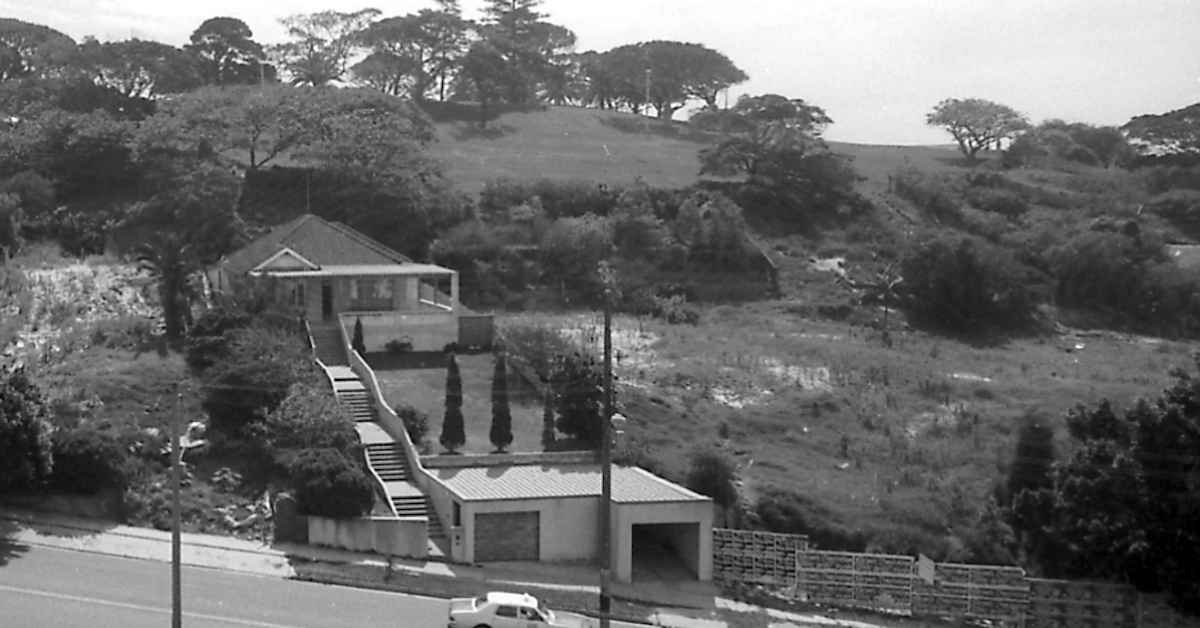
Long before Bellevue Hill became synonymous with grand homes and harbour views, it was a rugged ridgeline on the edge of colonial Sydney — a place travellers passed through on their way to South Head.
For thousands of years, the land formed part of the traditional country of the Cadigal people, whose connection to the coastline stretched from Sydney Harbour to the ocean. European settlement changed that landscape dramatically, beginning with the establishment of a lookout post at South Head in 1790 and the gradual clearing of a rough track that would later become Old South Head Road.
The Road That Changed Everything
In the early colonial years, South Head became strategically important for the young settlement. Soldiers, sailors and settlers regularly moved between Sydney Cove and the lookout post at Watsons Bay, carving a route across the ridges and valleys of what would later become Bellevue Hill.
Governor Lachlan Macquarie officially gave the area its name in 1820. He ordered a sign reading “Belle Vue” to be erected on a hilltop then known less elegantly as “Vinegar Hill”. The location — now Bellevue Park — quickly became a fashionable stopping point for wealthy Sydneysiders taking carriage rides to South Head.
The views were the attraction. From the rise, visitors could look across the harbour, Rose Bay and the distant coastline. Even in the early 1800s, the outlook alone was enough to turn the area into a destination.
The Giant Estate That Controlled the Hill
Much of Bellevue Hill’s story is tied to one enormous landholding: the Point Piper Estate.
Originally assembled by naval officer Captain John Piper through grants and purchases beginning in 1816, the estate eventually stretched across more than 1,300 acres. Financial troubles forced Piper to sell, and in 1826 the land was acquired by merchants Daniel Cooper and Solomon Levey.
The Cooper family would shape the future of Bellevue Hill for generations.
At the time, the district was considered remote and inconveniently far from Sydney town. Early development focused on sprawling estates for wealthy families who could afford private transport and self-sufficient homes.
By the mid-1800s, grand residences began appearing along Victoria Road and the surrounding ridges. Among them were Cranbrook, built for the Tooth family, and Ginahgulla, the mansion of newspaper proprietor John Fairfax.
Retail magnate Mark Foy later added Eummemering Hall, complete with elaborate pleasure grounds, water features and lookout points overlooking Rose Bay.
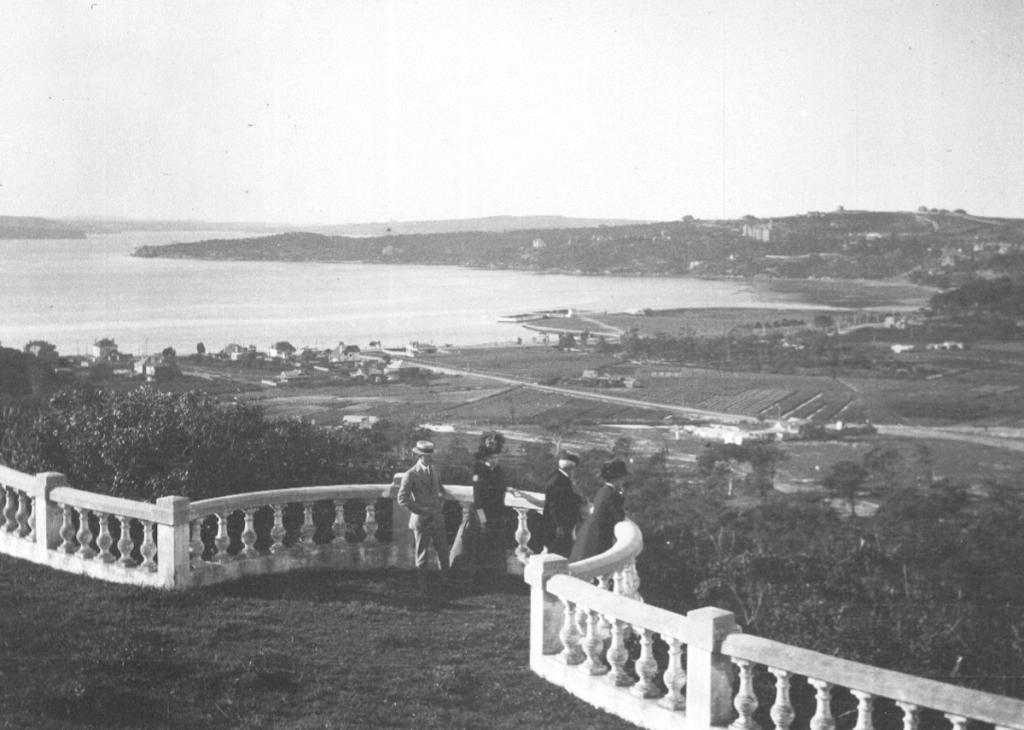
Photo Credit: Woollahra Libraries Digital Archive f000791
Why Bellevue Hill Stayed Empty for So Long
Despite its views and prestige, large parts of Bellevue Hill remained surprisingly undeveloped throughout the 19th century.
Economic downturns delayed subdivision plans, while restrictions written into Daniel Cooper’s will prevented outright land sales for decades. Instead, many properties were leased under long-term agreements.
An 1889 municipal map still showed huge stretches of largely untouched land around what would become the Bellevue Hill-Bondi Estate.
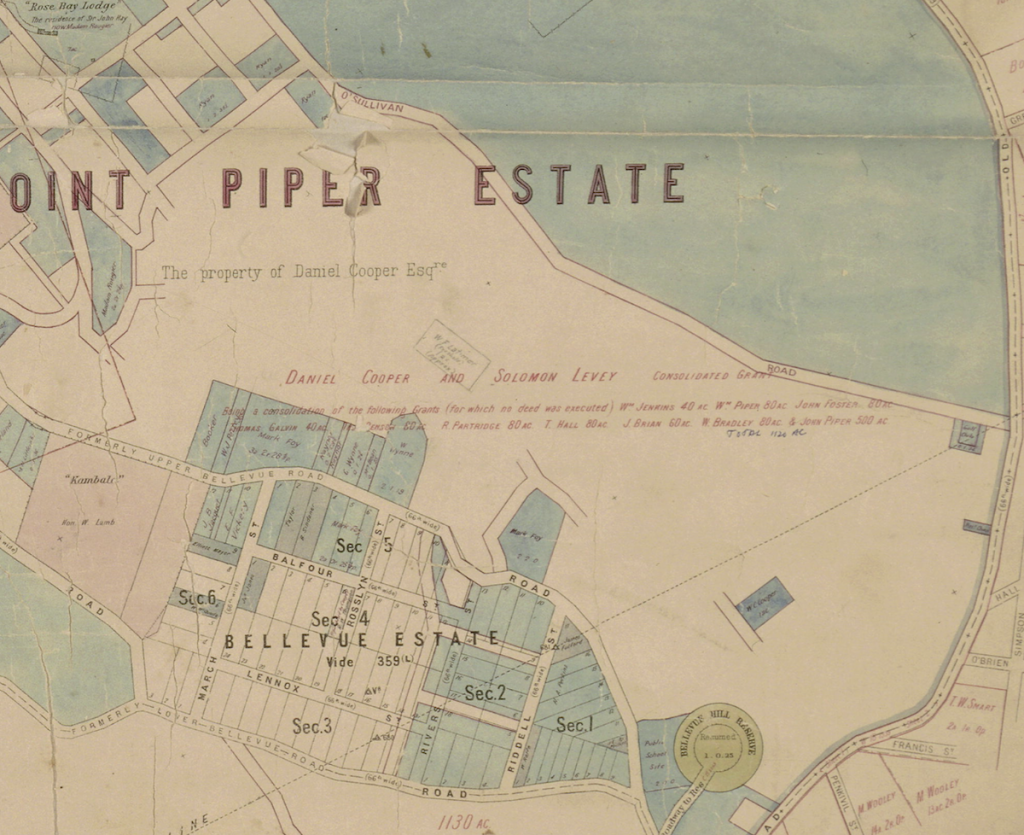
The Subdivision That Changed Bellevue Hill Forever
Everything shifted in the early 1900s.
In 1912, the Cooper family released the first subdivision of what became known as Cooper’s Bellevue Hill-Bondi Estate. Despite the name, the estate did not actually include Bondi itself. The marketing simply leaned heavily on Bondi Beach’s growing popularity and the promise of easy tram access.
The development centred on newly constructed Birriga Road, where a tram extension to Bondi Beach was planned. Advertisements promoted sweeping harbour and ocean views, proximity to the beach, and modern transport links.
There was one major problem: the land itself.
Developers battled steep terrain, unstable sandy soil and drainage issues while carving roads and building sites into the hillsides. Even so, the first auction in December 1912 proved a major success, with most allotments sold despite a broader property downturn.
Subsequent subdivisions followed in 1915 and 1919, gradually transforming the area from sparsely populated estate land into a fully established suburb.
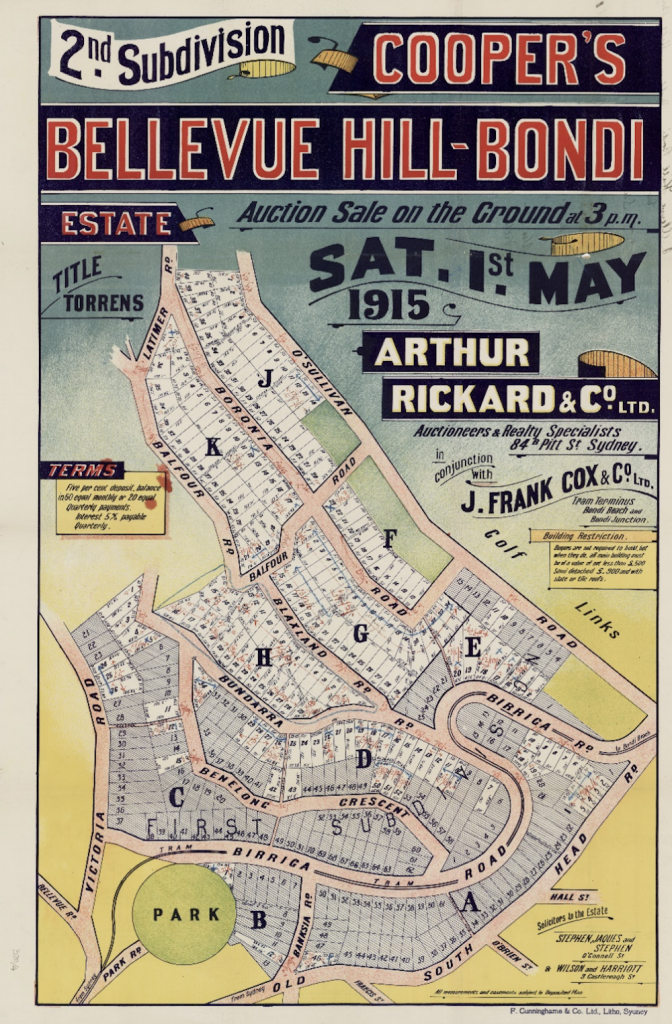
Photo Credit: State Library of NSW
From Colonial Retreat to Middle-Class Sydney
The Bellevue Hill-Bondi Estate marked a turning point in the suburb’s identity.
What had once been an exclusive enclave of colonial mansions slowly evolved into a more populated middle-class suburb, though clear social distinctions remained between different parts of the hill.
The Cooper estate imposed strict building standards on buyers, requiring homes to meet minimum values and use slate or tile roofing. Even then, the housing stock that emerged reflected a changing Sydney — one moving beyond isolated gentleman’s estates toward suburban life shaped by trams, roads and real estate speculation.
More than a century later, traces of those early decisions are still visible in Bellevue Hill’s winding streets, elevated outlooks and layered social history.
What began as a rough colonial track to South Head became one of Sydney’s most recognisable addresses.
Published 15-May-2026