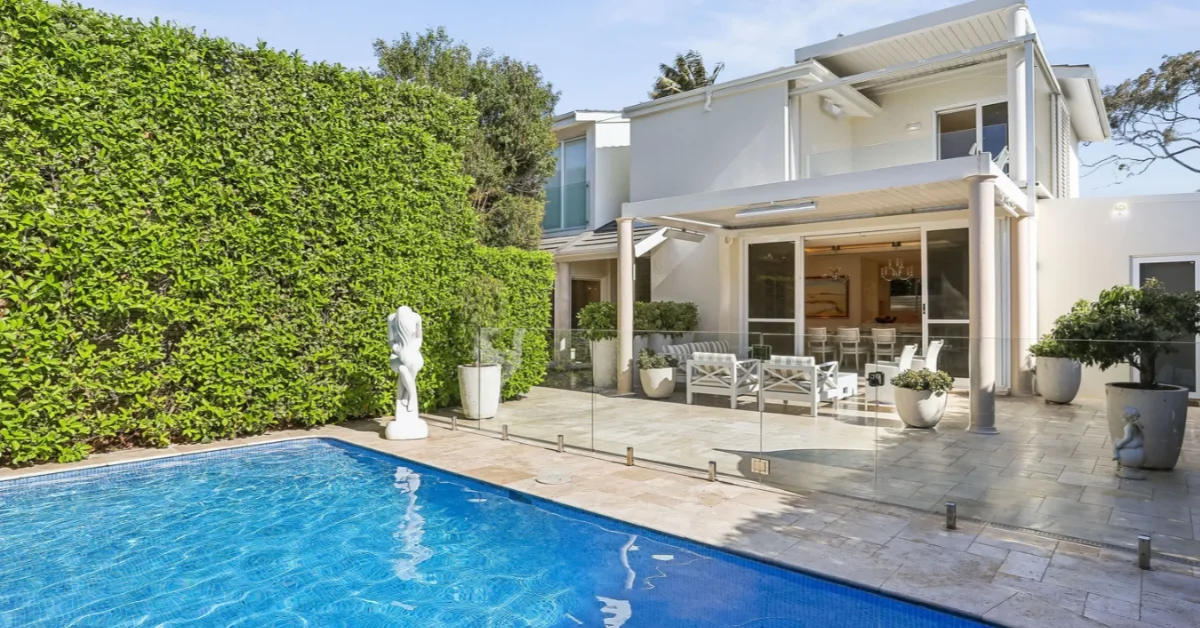
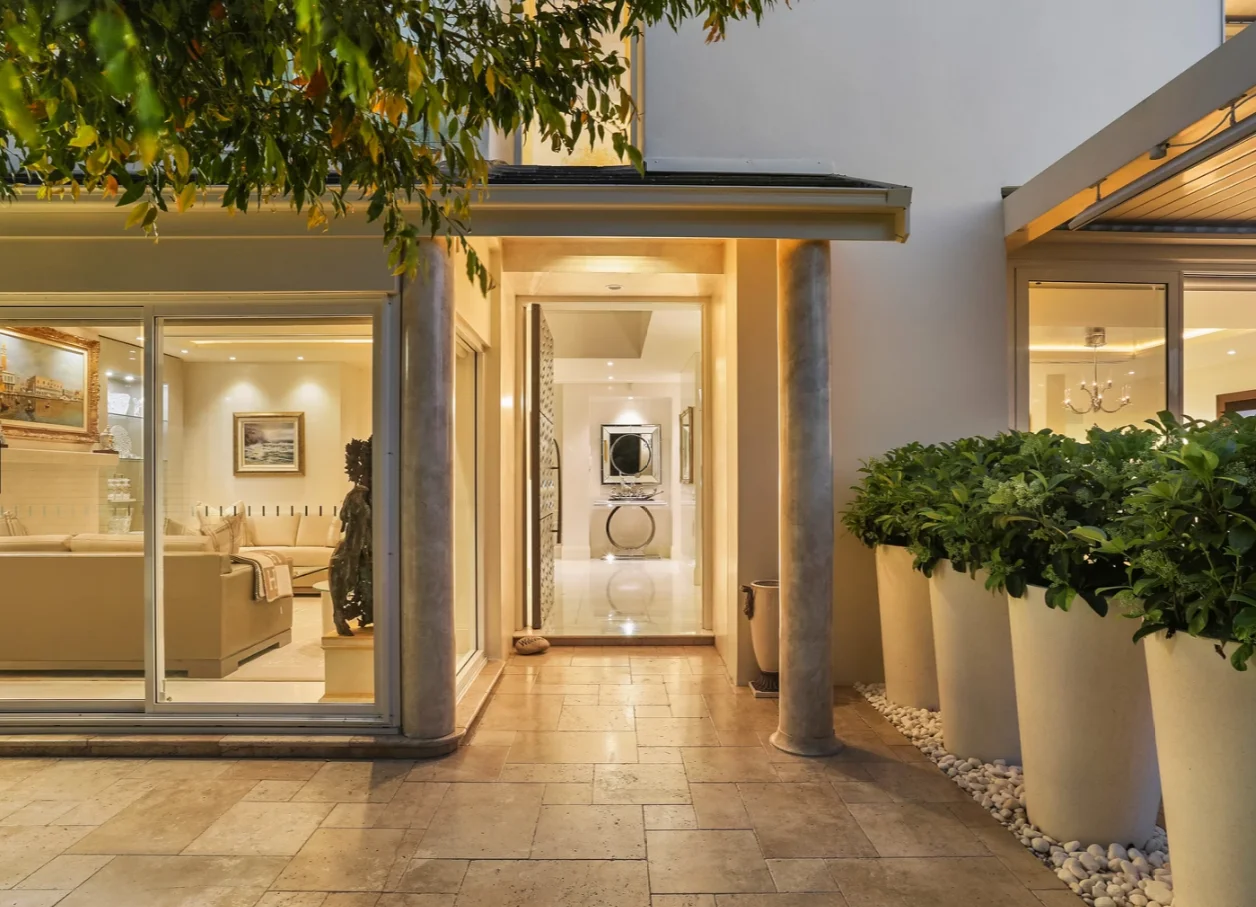
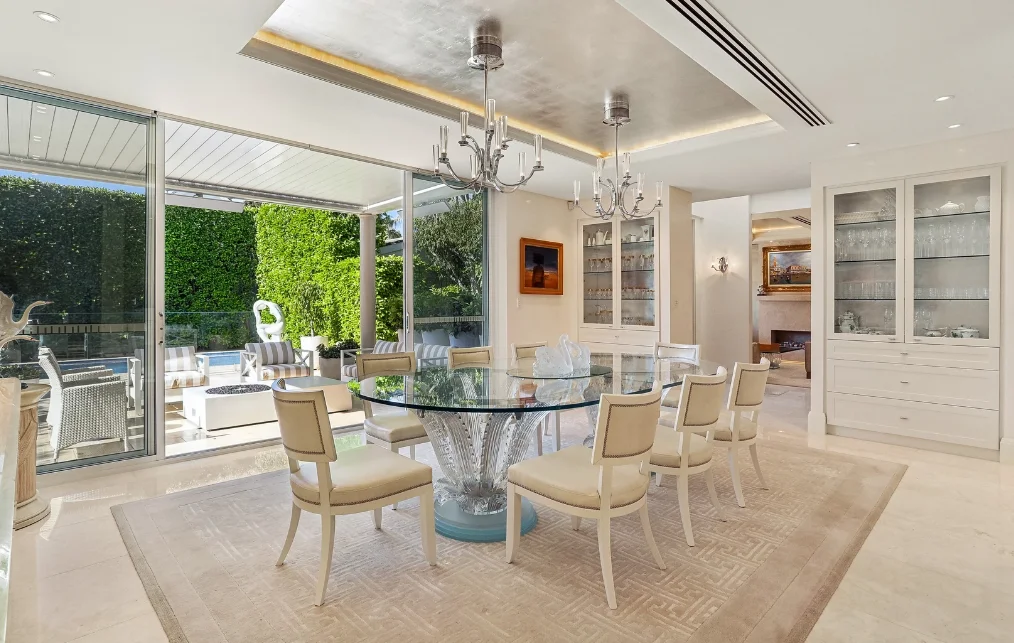
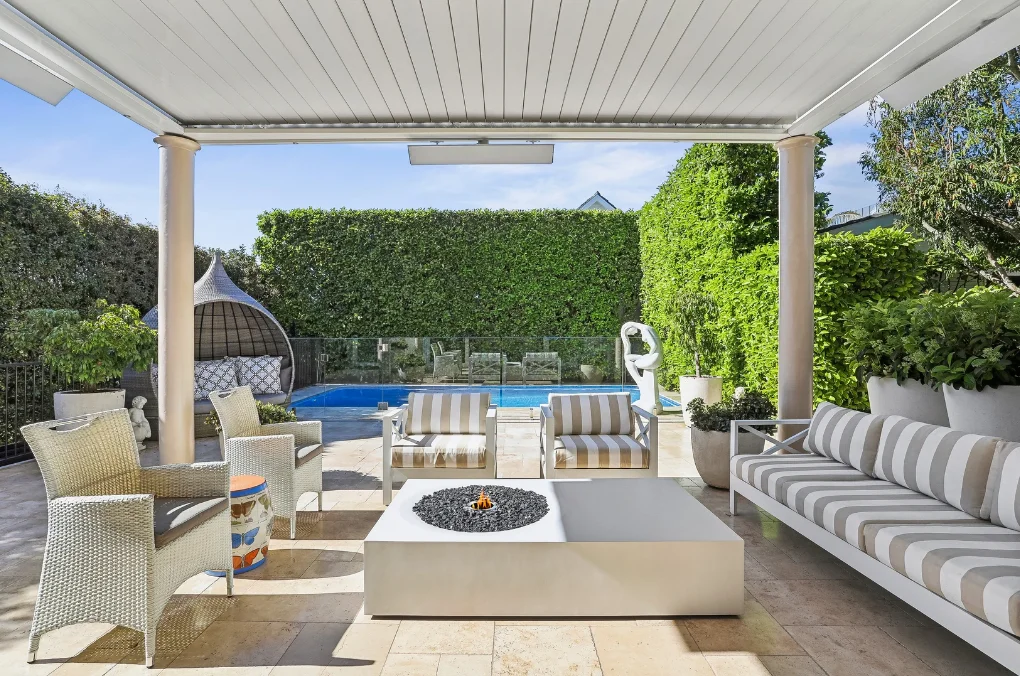
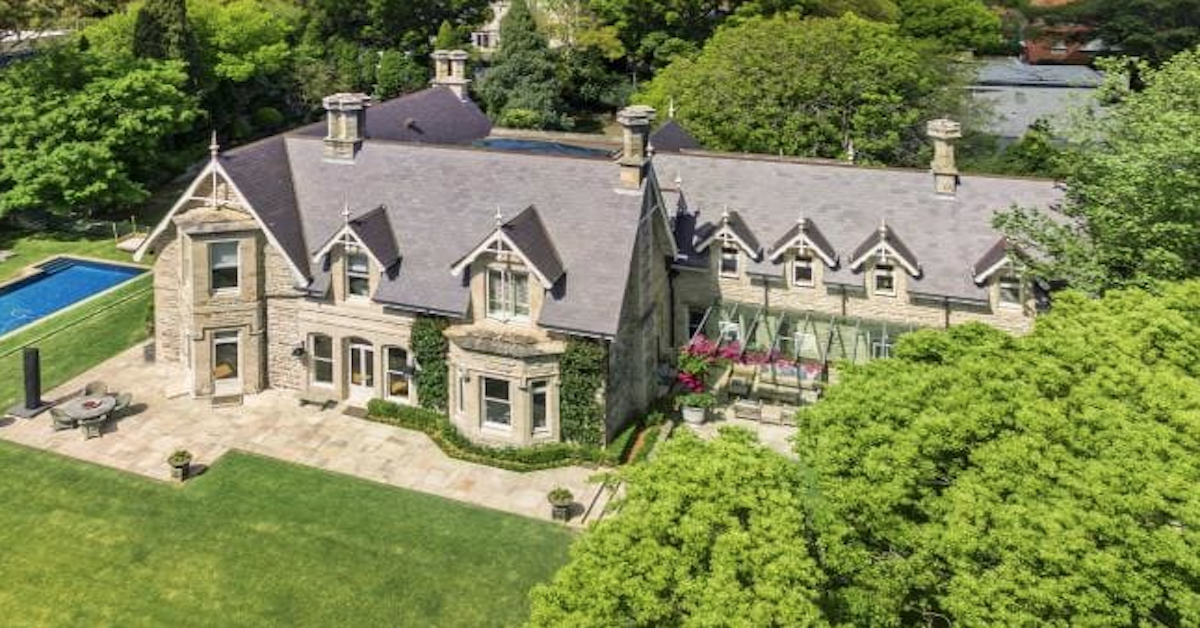
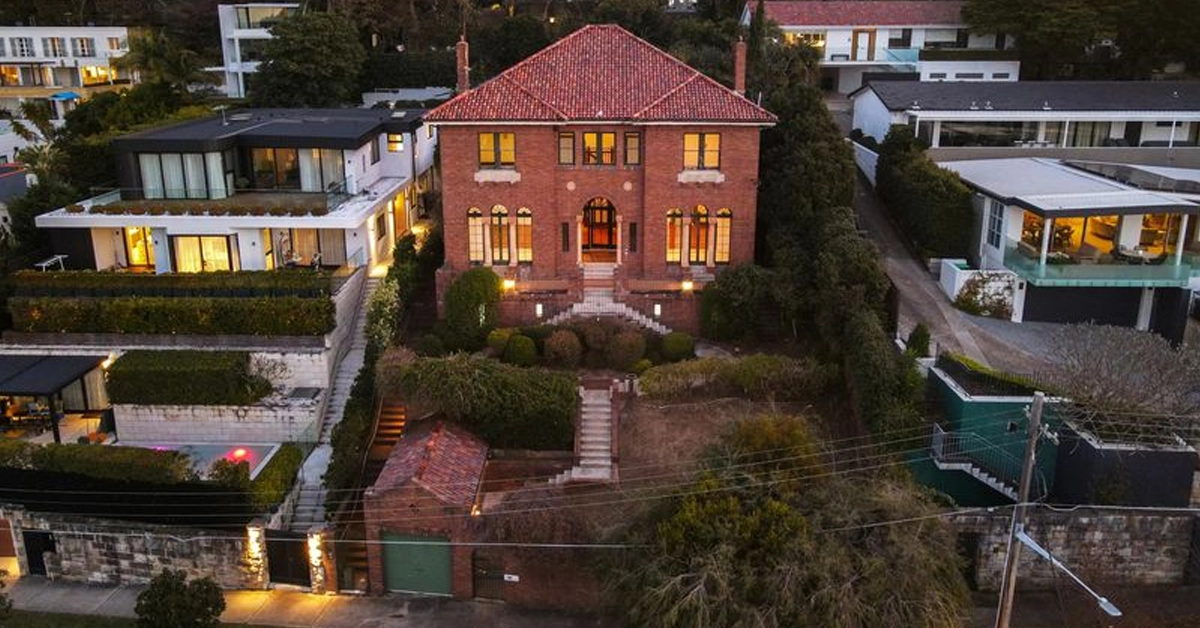
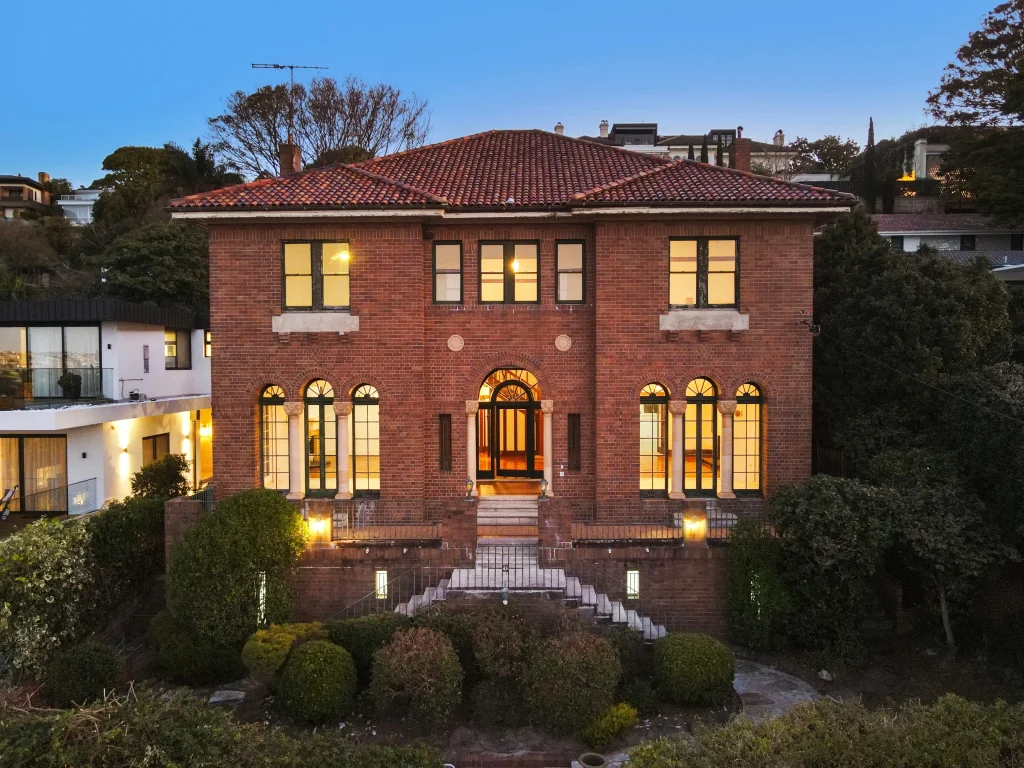
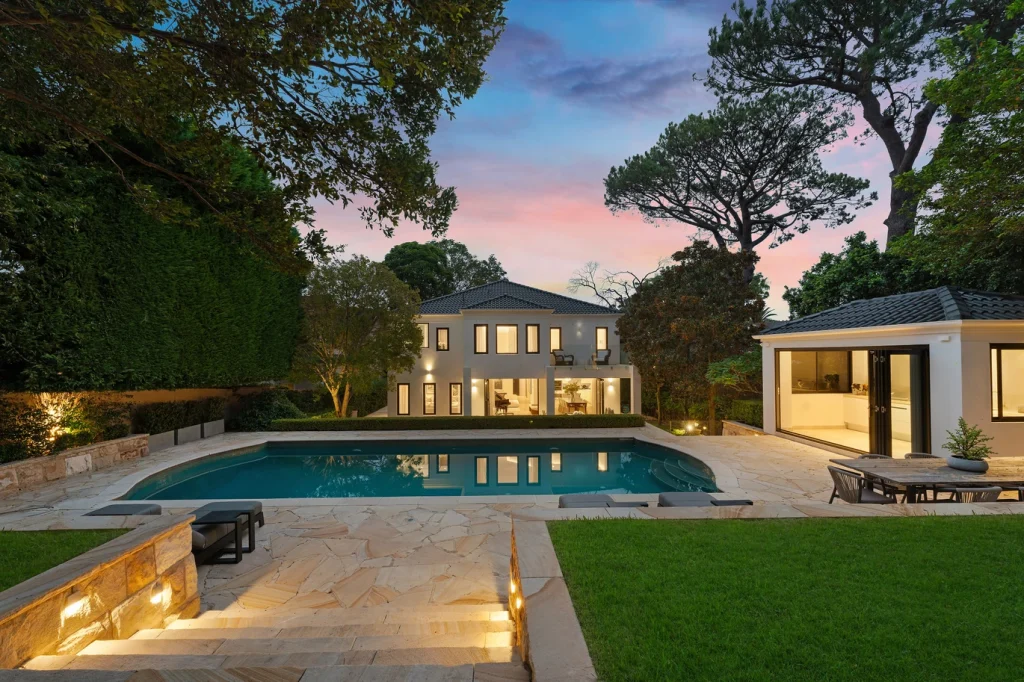
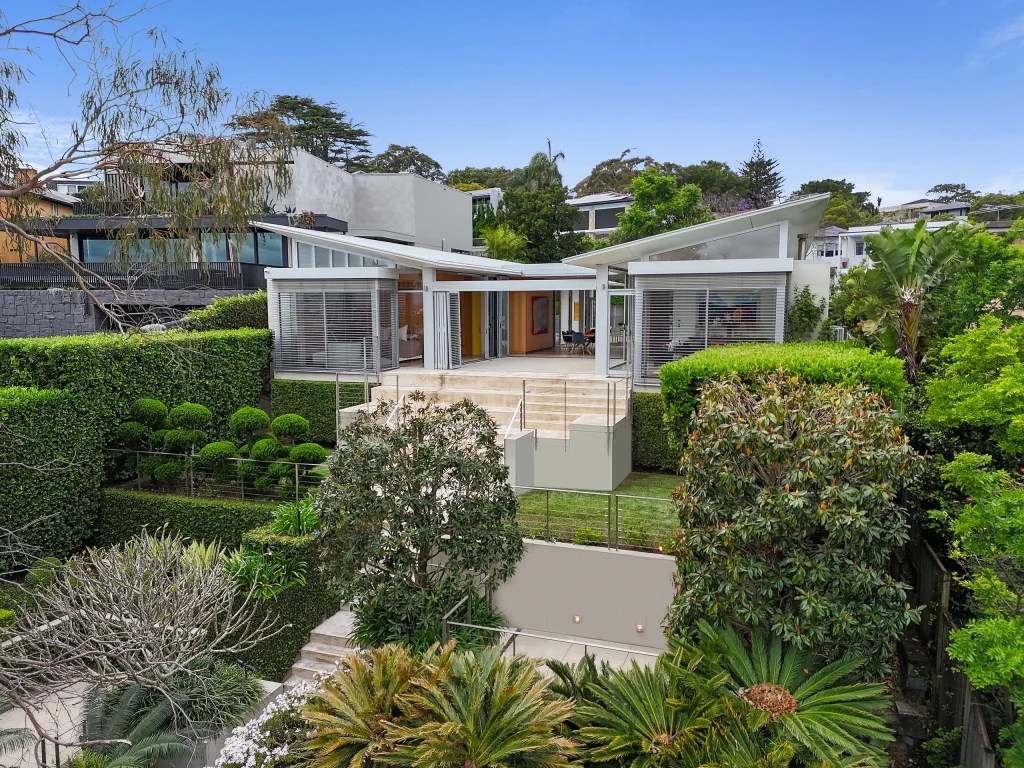
A high-end residence in Bellevue Hill has been sold ahead of auction, with Angela Fleming offloading the four-bedroom home in a deal exceeding $10 million.
A Bellevue Hill property scheduled for auction with a $12 million guide was sold prior to going under the hammer, securing a buyer before the campaign reached its final stage.
Photo Credit: Ray White Double Bay
The sale is understood to have exceeded $10 million, with the purchaser remaining unidentified.
The campaign was handled by Ray White Double Bay and Raine and Horne Double Bay, with Adam Reichman and Paul Langsam leading the listing.
Designed For Indoor-Outdoor Living
The freestanding residence is positioned within Bellevue Hill’s eastern suburbs setting, offering a north-east facing layout built around open-plan living.
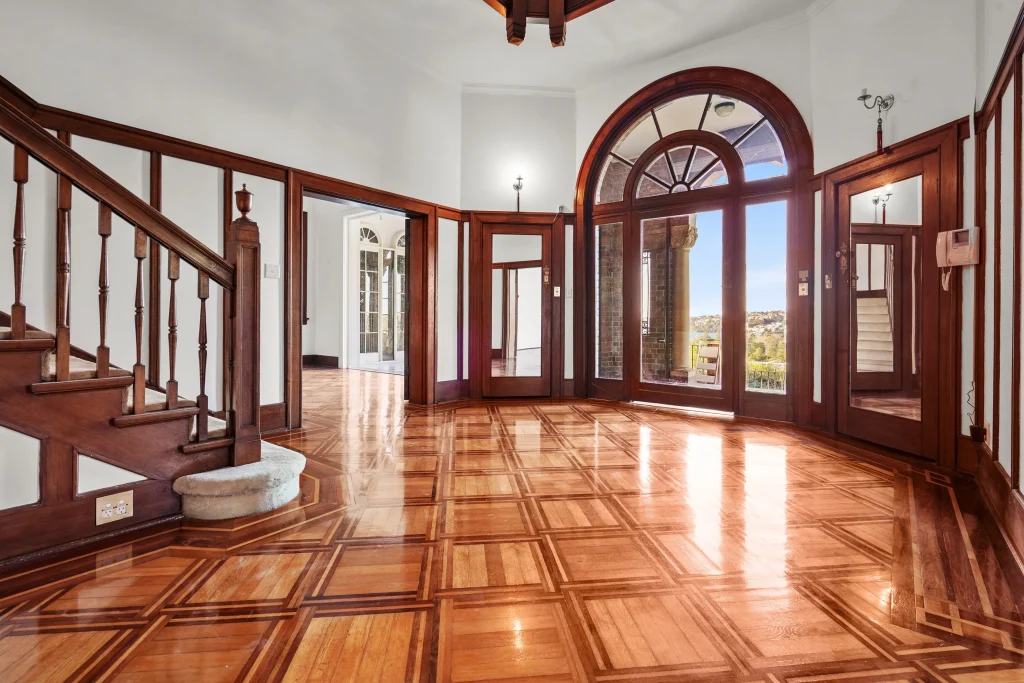
Interior spaces extend into a private courtyard designed for entertaining, featuring a mosaic salt-water pool. The home incorporates high-end finishes throughout, including marble, onyx and mother-of-pearl detailing.
Photo Credit: Ray White Double Bay
The property includes four bedrooms, three bathrooms, a separate study and multiple storage areas, alongside a double garage with additional parking spaces.
The master suite is equipped with a built-in wardrobe, a dedicated coffee nook and a covered terrace with views across the harbour and city skyline.
Long-Term Ownership And Sale
Angela Fleming acquired the Bellevue Hill home in 2015 for $6.5 million. Over time, the residence was updated with refined finishes while maintaining its overall layout.
Photo Credit: Ray White Double Bay
The recent sale represents a notable increase from the original purchase price.
Fleming, a property investor and the widow of Jim Fleming, sold the home as part of a reported sea change.
The NBA Basketball School has expanded its Sydney footprint with ongoing term-based programs in both Bellevue Hill and Lane Cove, strengthening its presence across the eastern suburbs and the Lower North Shore while reinforcing a long-term development model rather than short-term clinics.
Based at Cranbrook School and complemented by an ongoing Lane Cove program, the Sydney operations form part of a broader network designed to make structured NBA-approved coaching accessible across different parts of the city.
Two Distinct Term 1 Programs in Bellevue Hill
Bellevue Hill offers two distinct Term 1 programs.
Two programs are scheduled at the Bellevue Hill campus for Term 1 2026: a general Cranbrook Term 1 training program and a dedicated Shooting Mastery Program aimed at older participants. Both programs run for nine weeks and are delivered by NBA-approved coaches using a nationally consistent curriculum.
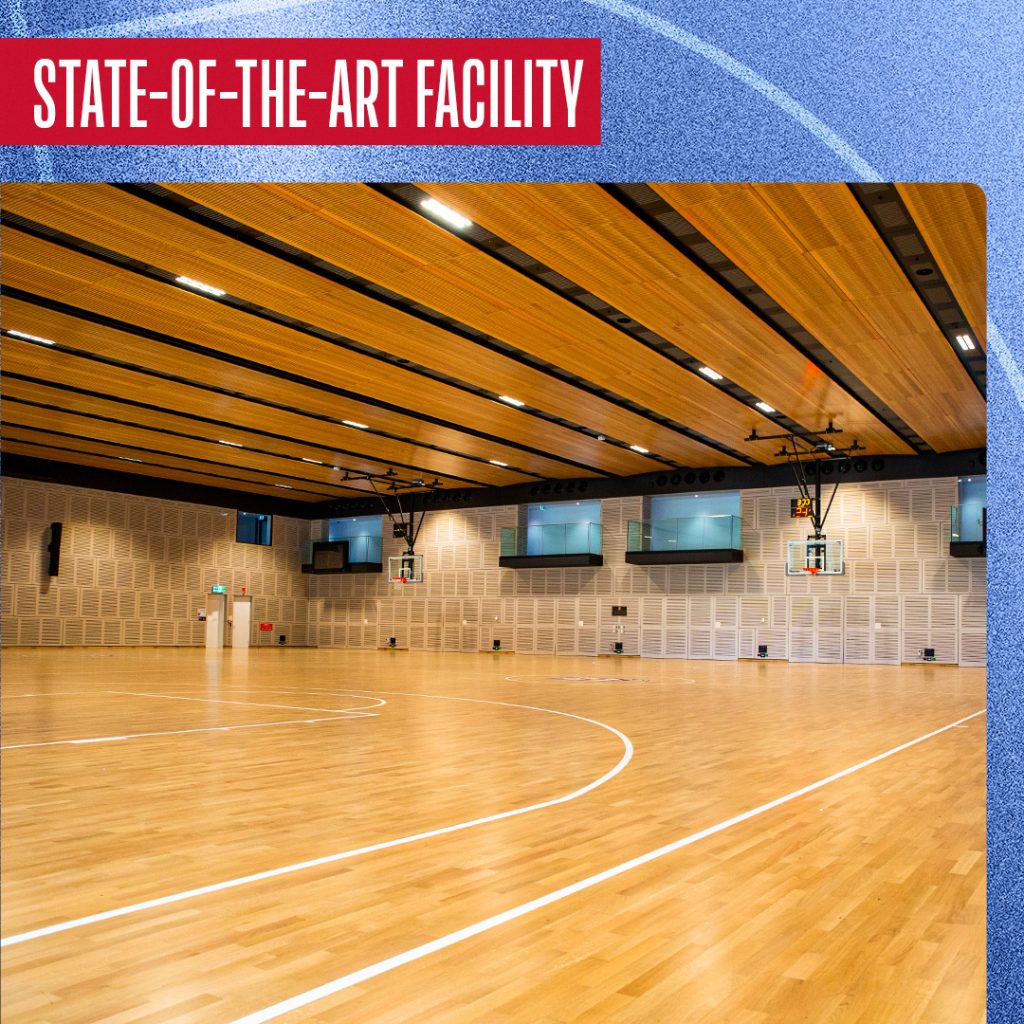
The Bellevue Hill programs operate from FIBA-regulation dual courts and modern training facilities, allowing participants to train in a structured, term-based environment.
Coaching across the Sydney programs is overseen by David Pereyra, whose international experience spans Argentina, Spain and Australia and includes all levels of junior basketball, from introductory programs through to advanced youth competition.
Curriculum delivery and technical oversight are guided by Technical Director Gianmarco Sapio, whose background includes national youth championships in China and leadership roles at elite development academies affiliated with both the NBA Basketball School network and the Chinese Basketball Association.
Together, the coaching and technical structure reflects the organisation’s emphasis on consistency, progression and long-term player development.
A program still in its early growth phase
NBA Basketball School Australia was launched in February 2023 by Basketball Magic and has expanded steadily since its Sydney debut at Cranbrook School, with additional locations established in Newcastle and Vaucluse.
Under CEO Bret Mactavish, the organisation has signalled further national expansion as it continues to build a network of term-based development hubs across Australia.
Walking through Bellevue Hill today, it is easy to overlook the layers of history beneath the tree-lined streets and grand homes. Among the suburb’s most enduring reminders of its past is Rona, a stately heritage house that has stood as a landmark for well over a century.
Rona holds a special place in the story of Bellevue Hill. Its presence speaks to a time when Sydney’s eastern suburbs were being shaped by new wealth, ambition and a desire to build homes that reflected both status and style.
Origins in a Growing Suburb
Rona was built in the late 1880s, a period when Bellevue Hill was emerging as a desirable address for Sydney’s growing professional class. The house was designed in a style that blended Victorian elegance with the kind of spacious planning suited to Sydney’s climate. The original owner was a prominent surgeon, reflecting the connection between the area’s early development and the city’s professional professionals.
The architect behind Rona was a respected designer of the era, who brought to the project a mastery of form and proportion that ensured the house would be admired for generations. Set within generous gardens, the property was designed with high ceilings, wide verandahs and large rooms that encouraged both family life and social entertaining.
As Bellevue Hill continued to grow, Rona remained one of its most notable homes. It was not only a private residence but also a visible sign of the suburb’s transition from semi-rural holdings to a neighbourhood defined by substantial houses and carefully planned gardens.
A Legacy of Preservation
Through changes in ownership and shifting tastes in architecture and design, Rona has retained much of its original character. This endurance is due in part to the value placed on heritage by successive owners and by the wider community in Bellevue Hill.
Over time, the house has been recognised for its architectural significance. It has become part of the cultural memory of the suburb, often admired by residents and visitors alike for its craftsmanship and its reflection of a bygone era.
Unlike many historic houses that have been altered beyond recognition, Rona has survived with a strong sense of its original identity. The retention of its key features has allowed it to stand as a tangible link to the late nineteenth century, when Sydney’s eastern suburbs were being reimagined by new residents seeking spacious homes away from the bustle of the city centre.
Rona and the Community
For many in Bellevue Hill, Rona is more than just a house. It is part of the fabric of the suburb, connected to local stories and memories. Long-time residents speak of the house as a fixture on the hilltop skyline, a reference point in neighbourhood life.
Its gardens and formal proportions set a tone for the street and serve as a reminder of the architectural ambitions that helped shape much of the eastern suburbs. Even for those who may never have stepped inside, the sight of Rona evokes a sense of tradition and continuity.
In a suburb where modern redevelopment and contemporary design continue to change the landscape, historic properties like Rona provide balance. They remind us where Bellevue Hill has come from and why heritage matters in a community that values both its present and its past.
Looking Back, Moving Forward
As Bellevue Hill evolves, Rona remains a reminder of the suburb’s early years. It tells a story of a growing city, of families and homes built to last, and of a community that recognises the importance of preservation.
For those interested in local history, exploring places like Rona can deepen an appreciation for the layers that make up Bellevue Hill. It stands not just as a house, but as a piece of living history, quietly connecting the past with the present.
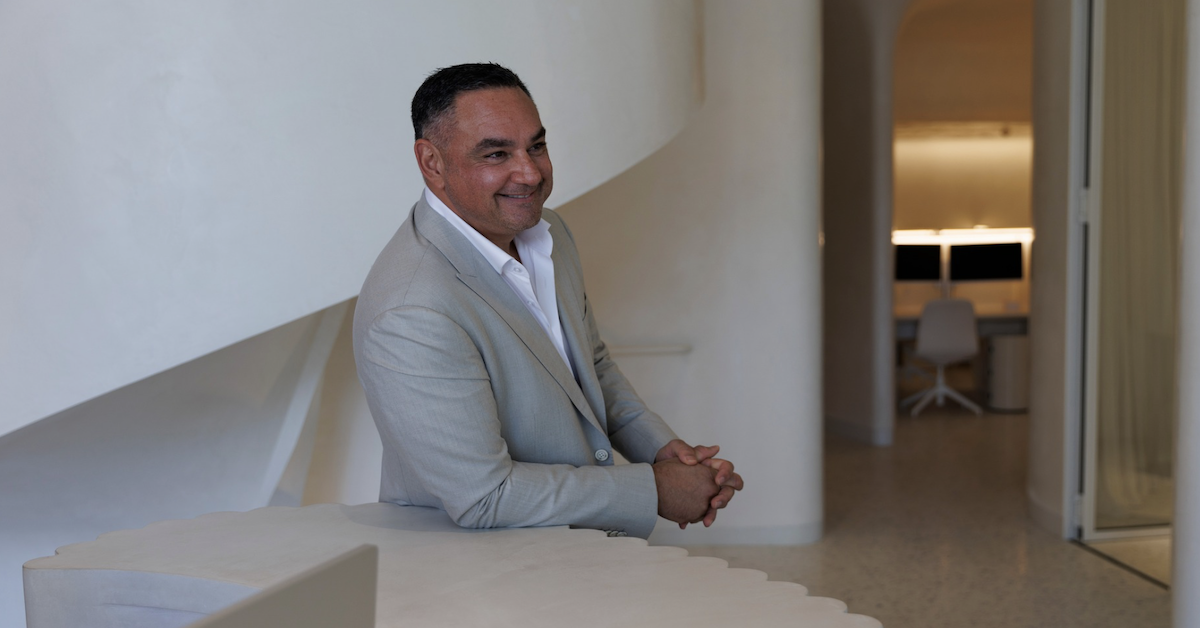
After a career spanning more than 30 years in property, Bellevue Hill real estate identity Albert Sassoon is stepping back from the front line of the market, marking the end of an era for one of the suburb’s most familiar agents.
Sassoon’s departure from day-to-day real estate work comes after more than three decades spent helping locals buy and sell some of Bellevue Hill’s most noteworthy homes. For many residents, he has been a constant presence in a market known for its long sales cycles and unique prestige.
A Career Built in the Eastern Suburbs
Sassoon began his career when the eastern suburbs property market looked very different to today. Over the years, he has worked with generations of families, navigating cycles of growth, downturns and unique local trends that accompany a high-end Sydney market.
His work has covered a variety of properties, from classic federation homes hidden down leafy streets to contemporary estates with sweeping harbour views. Many of these properties defined their streets and often became talking points among neighbours long after settled prices were recorded.
In a suburb where address and aspect can be as important as floor plan and finish, agents tend to become part of the neighbourhood’s fabric. For Sassoon, that meant not just knowing market values but understanding how families live and grow in Bellevue Hill.
Shifts in the Local Market
During his time in real estate, Bellevue Hill has seen significant changes. Large blocks have grown scarcer, newer architectural styles have reshaped parts of the suburb, and luxury buyers from interstate and overseas have increasingly eyed local listings.
These shifts have required agents to adapt, balancing traditional relationship-based selling with modern digital marketing and broader buyer pools. Throughout, Sassoon has worked alongside buyers and sellers in some of the suburb’s most talked-about transactions.
Looking Back, Looking Forward
While he will no longer be active in negotiations and listings, Sassoon’s influence on Bellevue Hill’s real estate community is clear. Colleagues and clients alike remember him as someone who knew the suburb inside out, from its hidden lanes to its headline-grabbing properties.
His retirement also provides a snapshot of how the Bellevue Hill market has matured. Long-standing agents often see patterns and cycles that shorter-term participants miss, and Sassoon’s tenure captured several decades of shifting values and housing demand.
A Legacy in Local Property
For many Bellevue Hill residents, the property market is not just about prices but about place. It is about schools, neighbours, garden spaces and the way the suburb’s streets change subtly over years rather than months.
In that sense, Sassoon’s career reflects a community as much as a marketplace. He has helped bring people into Bellevue Hill and guided others through their next chapter, leaving behind a record of transactions that map closely to the suburb’s own evolution.
As he steps away from the daily pace of real estate, the local market continues to serve a diverse and often global audience. Yet for many, his name will remain synonymous with Bellevue Hill’s property story over the past generation.
Did you know that blocks larger than 2500 square metres are now almost unheard of in Bellevue Hill? That scarcity came into focus this week when long-time resident Gretel Packer quietly purchased the property next door to her home for about $59 million, expanding one of the suburb’s largest private landholdings.
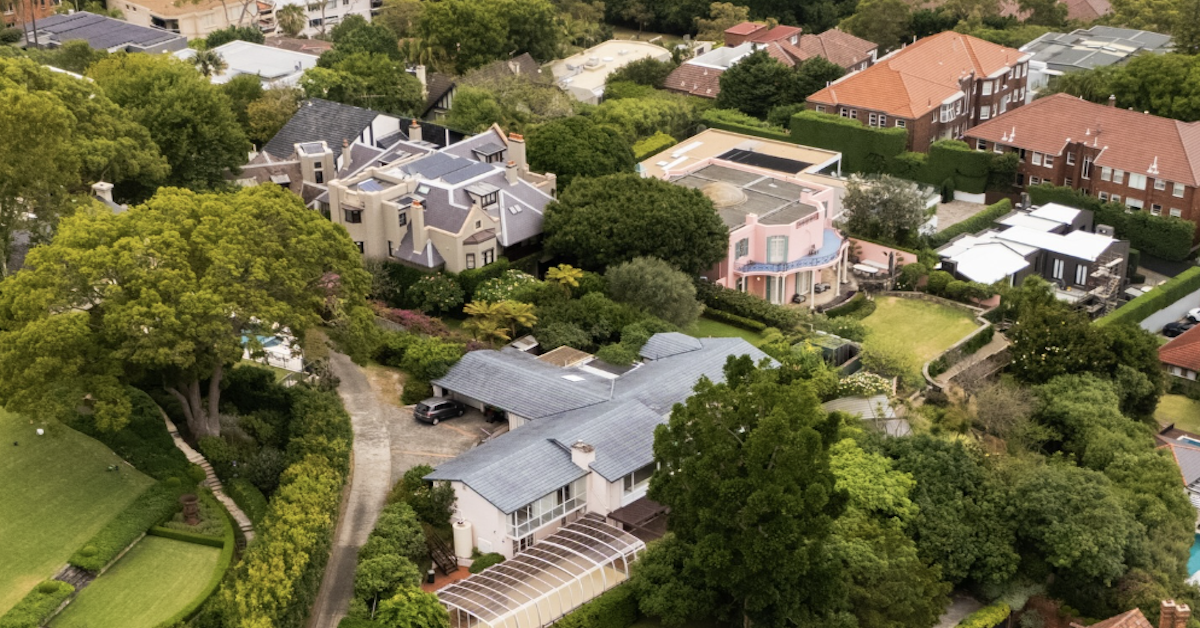
The off-market sale brings together more than 2600 square metres of land in a part of Bellevue Hill where most streets have been fully built out for decades.
A Familiar Name, A Familiar Pattern
Packer has lived in Bellevue Hill for many years and is a well-known figure in the area. Her decision to secure the neighbouring site follows a pattern locals will recognise, where established residents move quickly when an adjoining property becomes available.
In suburbs like Bellevue Hill, opportunities to expand an existing holding are few and far between. When they do arise, they are often taken by owners already settled in the neighbourhood rather than buyers looking for a first foothold.
Why This Sale Matters Locally
The property includes an older home alongside an adjoining vacant block, a combination that has become increasingly rare in Bellevue Hill. With most allotments already developed, chances to assemble land at this scale are limited.
For locals, the sale reflects a broader shift in how the suburb is changing. Instead of frequent turnover, Bellevue Hill is seeing more consolidation, with fewer but larger estates quietly reshaping streetscapes.
Off-Market Deals Now Common
As with many high-value sales in the area, the transaction was completed off-market, without a public listing or auction. Discreet sales have become standard in Bellevue Hill, where privacy is often prioritised by both buyers and sellers.
Local agents say some of the suburb’s most significant property changes now happen without much public visibility, becoming apparent only once settlements are finalised.
What It Signals for the Suburb
While the price tag naturally draws attention, the longer-term impact is about land use and neighbourhood character. Larger consolidated holdings often mean fewer homes, more internal open space and a continuation of Bellevue Hill’s low-density feel.
For residents who have watched the suburb evolve over decades, Packer’s purchase is less about the figure attached to it and more about what it confirms. Large land parcels are disappearing, and when they surface, they tend to stay in local hands.
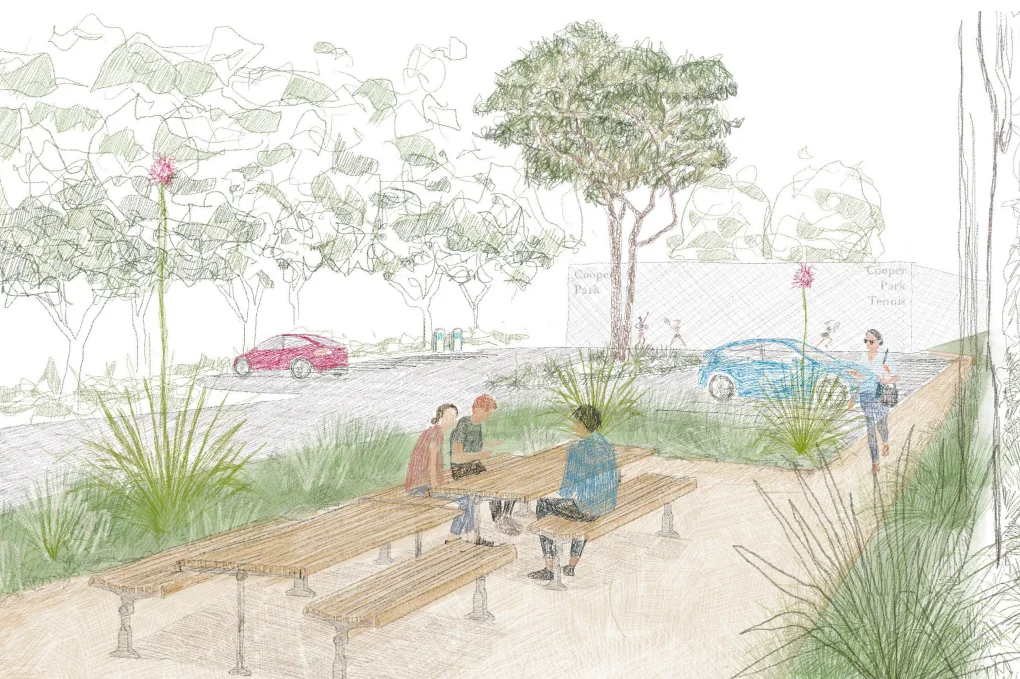
At 17.7 hectares, Cooper Park is the largest urban bushland in the area, and new draft plans have now set out how this Bellevue Hill landmark will be managed and improved.
Cooper Park was gazetted as a public park in 1917 and has since become a defining green space in Bellevue Hill. It contains 12 hectares of bushland, walking tracks, sportsfields, picnic areas, and heritage structures such as the 1930s amphitheatre and the Moon Bridge. The park is already listed on the Woollahra Local Environmental Plan 2014, with Council also pursuing recognition on the State Heritage Register.
Photo Credit: WoollahraMunicipalCouncil
Features of the Draft Plan
The draft Plan of Management, prepared under the Local Government Act 1993, sets out five categories of land: Park, Sportsground, General Community Use, Natural Area – Bushland, and Natural Area – Watercourse. These categories ensure clear guidance for recreation, heritage, and conservation.
The Master Plan proposes a range of upgrades over the next 10 to 15 years:
A reconfigured Bunna Place entry and carpark with traffic calming and additional parking bays.
Expanded play areas and picnic grounds, with new lawn spaces and creek-edge improvements.
Amphitheatre enhancements including terraces, seating, and a fitness station to support small events.
Creek and pond rehabilitation through water sensitive urban design to improve water quality and habitat.
Designated dog off-leash areas at selected sites and time-restricted access at Lower Cooper Park.
Photo Credit: WoollahraMunicipalCouncil
Community Consultation and Feedback
The draft plans follow two stages of consultation. Between November 2023 and February 2024, 155 submissions were received from the community. A further exhibition period took place from 23 April to 6 June 2025, supported by three community pop-up sessions and a statutory public hearing on 28 May 2025.
Feedback highlighted the community’s strong attachment to the park’s bushland setting, along with requests for better facilities and the need to balance competing uses such as sport, family recreation, and dog exercise.
The Cooper Park draft Plan of Management and Master Plan, now updated with community input, was presented to Woollahra Council’s Environmental Planning Committee on Monday, 1 September 2025, at 6:30 p.m. If adopted, the plans will guide the long-term future of Cooper Park, ensuring it remains a central natural and heritage space for Bellevue Hill.
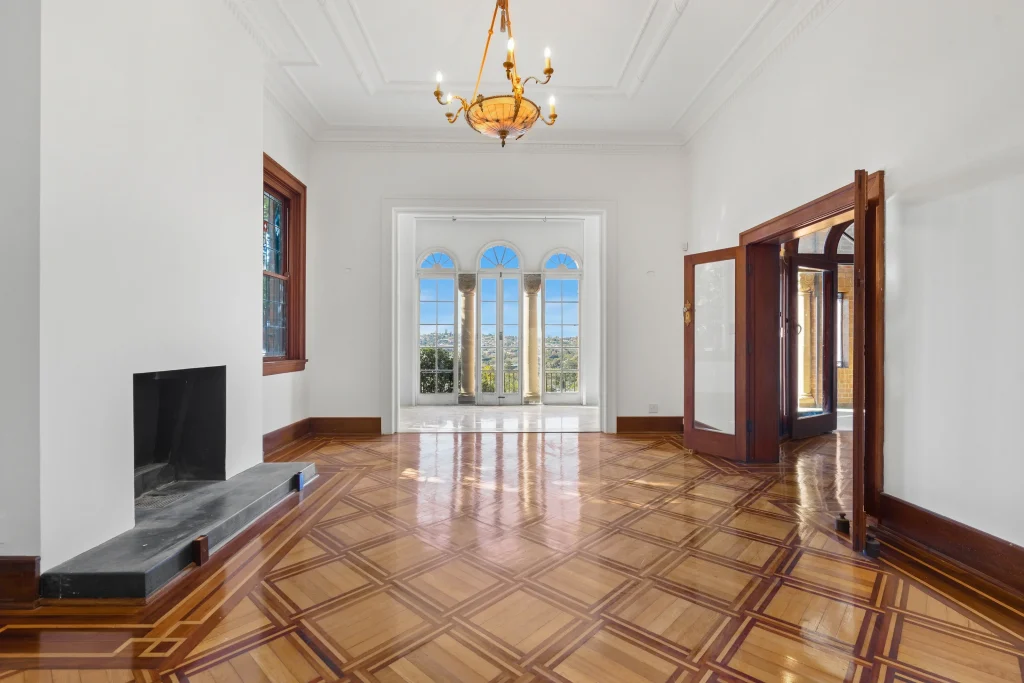
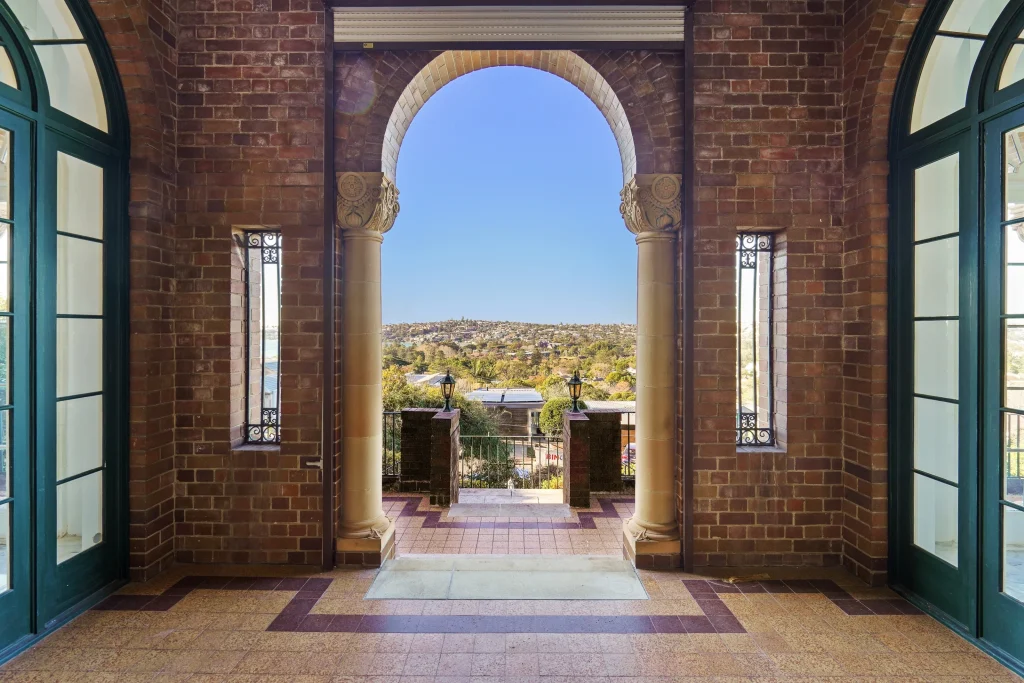
A distinguished 1930s Bellevue Hill estate has changed hands for $21,076,000 following an intense private auction that saw 19 registered parties vying for the prized property.
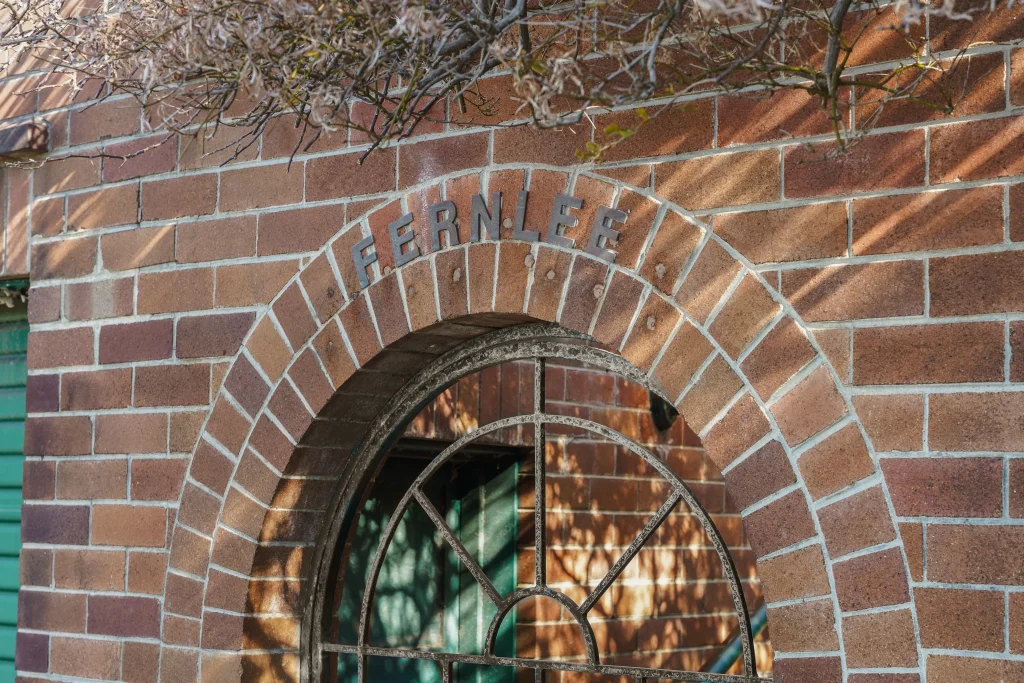
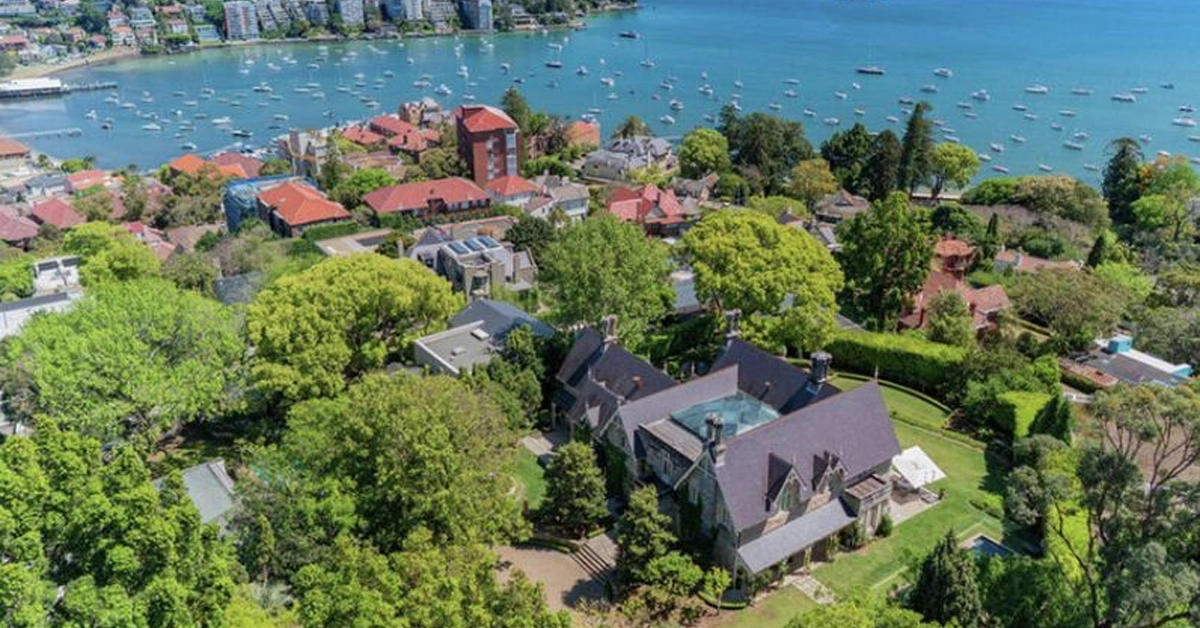
The four-bedroom deceased estate known as ‘Fernlee’, positioned at 41 Drumalbyn Road on an elevated 930-square-metre block with sweeping harbour vistas, attracted considerable interest from potential buyers despite initially carrying a guide price of $13 million to $14.3 million when it first appeared on the market in July.
The substantial final sale price represented a remarkable $6 million premium above the revised guide of $15 million, which had been adjusted just 10 days prior to the auction after the property received two early offers.
According to selling agent Steven Zoellner from Laing + Simmons Double Bay, the property’s unique character and prime location drove the exceptional result. The residence features the grand proportions typical of homes from its era, including soaring ceilings, generously proportioned rooms, and the timeless appeal that comes with nearly a century of heritage.
Auctioneer Jake Moore from Cooleys conducted proceedings at the Double Bay offices, with bidding commencing at $16 million and climbing in $500,000 increments until reaching $20 million. The competition intensified significantly in the final stages, with increments dropping to just $1,000 as four determined bidders pushed beyond the $20 million mark.
The auction attracted 38 bids in total, with the contest ultimately narrowing to two final participants above $21 million. Industry sources indicate the successful purchaser was represented by prominent buyer’s agent Simon Cohen and is currently residing overseas. The runner-up bidder was understood to be a local Bellevue Hill resident.
The property had remained in the hands of the same family since 1990, when medical practitioners Katherine Tang Yiu and her late husband Robert acquired it for $2.3 million. Dr Tang Yiu, who passed away last July at age 91, had relocated from the residence six years earlier, leaving the substantial home unoccupied.
Family tributes described Dr Tang Yiu as a woman of remarkable energy who maintained the expansive property and its extensive gardens with dedication. Her knowledge of Chinese history and antiques was particularly noted, with the home housing a collection of furniture and artwork rich in cultural significance.
The property carries additional historical interest through its previous ownership. Records show it was purchased in 1931 by Ulisse Pellegrini, the managing director of Pellegrini and Co, a Melbourne-established firm that supplied religious articles to Catholic institutions across Australia.
Mr Pellegrini, who received papal recognition through the Knighthood of St Gregory in 1947, had been granted a private audience with Pope Pius XI during a 1929 European visit. He passed away at Lewisham Hospital in February 1950 at age 56.
The current sale reflects the continued strength of Sydney’s prestige property market, particularly in tightly held locations such as Bellevue Hill’s dress-circle streets. The substantial interest from both local and international buyers demonstrates the enduring appeal of heritage properties with premium positioning and harbour access.
Bellevue Hill residents are witnessing their suburb inch ever closer to making Australian property history, with the latest data revealing the median house price has reached $9.925 million – just $75,000 shy of the unprecedented $10 million mark.
According to the latest Domain House Price Report released this week, the prestigious eastern suburb has experienced remarkable growth, with property values climbing by $4.3 million over the past five years. This meteoric rise positions Bellevue Hill as Australia’s most expensive suburb, with experts predicting the historic milestone will be achieved by year’s end.
69 Bulkara Road, Bellevue Hill sold for $25,500,000 on June 10, 2025. Photo Credit: Ray White Double Bay
Dr Nicola Powell, Domain’s chief of research and economics, highlighted the significance of this growth for existing homeowners. Those who purchased properties before the COVID-19 pandemic have seen multimillion-dollar increases in their home values, she noted.
The suburb’s appeal has remained consistently strong since 2012, driven by factors that distinguish it from other prestigious Sydney locations. Local real estate professionals point to several key advantages that continue to attract affluent buyers to the area.
Ben Collier from The Agency explained that buyers from Vaucluse are increasingly drawn to Bellevue Hill for its superior city access, even though many properties lack harbour views. As waterfront properties become increasingly scarce across Sydney’s eastern suburbs, discerning buyers are turning to Bellevue Hill as their preferred alternative.
The suburb’s unique combination of central location and generous land sizes sets it apart from competitors such as Vaucluse, Bondi Junction, Bronte, and Mosman. Di Wilson from Ray White Double Bay emphasised that residents benefit from proximity to city amenities whilst enjoying the space and privacy typically associated with more distant locations.
Post-pandemic market dynamics have further fuelled demand, with buyers prioritising city proximity over traditional preferences. Oliver Lavers from TRG observed that online property searches now favour inner-city addresses like Bellevue Hill over previously popular Vaucluse listings.
24 Kambala Road, Bellevue Hill sold for $13,900,000 on May 14, 2025. Photo Credit: Ray White Double Bay
The premium placed on renovated properties has contributed significantly to price escalation. Lavers cited a remarkable example where a Fairweather Street property purchased for $9 million in 2020 underwent $3 million in renovations and sold for $21 million just two years later.
Land scarcity in prime streets has reached critical levels, with vacant blocks in prestigious locations like Kambala Road and Bulkara Road commanding prices exceeding $10 million. A recent Kambala Road land sale achieved $13 million for an undeveloped block, demonstrating the suburb’s escalating value proposition.
The year has been particularly notable for trophy sales, with several transactions exceeding $40 million. Significant deals include filmmaker Warwick Ross and former journalist Margot Ross achieving $50 million for their property, whilst retail executive Ellie Tavakoli from ACS Designer Bathrooms secured $45 million for her Kambala Road mansion. Local buyers also completed a $45 million purchase within the suburb.
These figures follow last year’s record-breaking $80 million sale of Alcooringa, the Spanish Mission mansion sold by property developer Stephanie Conley-Buhre.
Industry professionals anticipate continued upward pressure on prices, with Collier predicting that Bellevue Hill may eventually breach the $100 million ceiling for individual property sales. The concentration of ultra-high-value transactions this year alone suggests the suburb’s premium market remains robust.
Recent data confirms that both Bellevue Hill and Vaucluse have experienced exceptional year-on-year growth, with average increases exceeding one million dollars, reinforcing the suburb’s position at the apex of Sydney’s property market.
As the suburb approaches this historic pricing milestone, residents and observers alike are watching to see whether Bellevue Hill will become the first Australian suburb to achieve a median house price of $10 million, cementing its status as the nation’s most exclusive residential enclave.
A property owner based in Bellevue Hill has entered into agreements to host dozens of wind turbines on regional land near Yass, drawing concern from nearby farmers.
Will Kelly, a resident of Bellevue Hill and member of an exclusive Sydney golf club, owns a large rural property near Yass in New South Wales. His brother, Sam Kelly, owns the neighbouring lot. Both properties have been selected to host a major portion of the proposed Bendenine Wind Farm.
The wind farm project, proposed by developer Wind Prospect, is planned for a site between the towns of Bowning and Binalong. It includes up to 90 turbines, each 260 metres tall. The Kelly brothers’ properties are expected to host a significant number of these turbines.
Contracts between Wind Prospect and the Kelly brothers were made privately and became known to neighbouring property owners earlier in the year. Some residents have raised concerns about the lack of transparency, as their properties border turbine sites but were not included in negotiations.
In response to rising local interest, Wind Prospect attended a community meeting on 21 May at Bowning Hall, hosted by the Bowning and District Progress Association. The session was used to introduce the project and provide details to residents.
Community Reaction and Concerns
Several residents have raised questions over the fairness of the arrangements, pointing to potential declines in land value and the visual impact of turbines located near their boundaries.
Public commentary shared online has ranged from objections about environmental and economic concerns to debate over whether such infrastructure should be built in rural areas. Some residents questioned why turbine infrastructure was not placed closer to metropolitan users.
Photo Credit: Wind Prospect
Project Status and Oversight
Wind Prospect maintains that it has engaged with the community in a respectful and transparent manner. The Bendenine Wind Farm remains in its early planning stages, with no formal development application yet lodged.
Officials have confirmed that landholders such as Will and Sam Kelly are within their rights to negotiate private land use agreements, subject to final planning approvals. Wind Prospect has stated it will hand over the project to Mint Renewables at a later stage, though no specific timeframe for this transition has been disclosed.
There is no suggestion of wrongdoing by either of the Kelly brothers. The focus from nearby residents remains on the broader planning process and how similar arrangements are communicated to the wider community.
Caerleon, a red-brick mansion nestled in Bellevue Hill, quietly holds the title of being Australia’s first home built in the Queen Anne style, a design that would later shape much of the country’s Federation architecture.
Caerleon was completed in the mid-1880s for Charles B. Fairfax, a member of the well-known Fairfax family. At a time when most Sydney homes were built in the Gothic or Italianate styles, Caerleon marked a significant shift in taste and ambition. The house was one of the earliest signs that Australia was developing its own take on European design movements.
The Bellevue Hill home was named after the small town of Caerleon in Wales, a place famed for its Roman fortress and rich historical legacy. Its Welsh name (Caerllion) literally means “fortress of the legion”—an apt moniker given the town’s significance as a Roman military base. According to heritage records, Fairfax chose this name for his new Sydney home, likely to evoke the grandeur and historical weight associated with its Welsh namesake.
While Sydney architect Harry Kent created the first plans, they were later reworked in London by British architect Maurice Adams. The redesign caused some quiet tension. Kent’s contributions were overlooked in an exhibition in England, even though he remained the one who supervised its actual construction. This behind-the-scenes dispute never became a public scandal, but it shaped how the project was remembered within architecture circles.
A Home with a Distinct Personality
Unlike the uniform facades of other grand homes of its time, Caerleon stood out with its red brick walls, terracotta tiles, and timber detailing. It featured elements such as steep gables, tall chimneys, stained-glass windows and verandahs trimmed in timber, features that were then considered new and even risky. Over time, these would influence a whole generation of domestic architecture in New South Wales.
The home sits on a slope above the harbour, offering views that were rare when it was first built. Its Queen Anne style became widely admired and set a pattern followed by many other homes in Sydney’s eastern suburbs.
Recognised for its cultural and architectural significance, Caerleon is listed on both the New South Wales State Heritage Register and the former Register of the National Estate. These listings ensure that key elements of the home are preserved, not just for its owners but for the community and future generations to learn from.
While private, the house remains a quiet part of Bellevue Hill’s local identity. It reminds residents of the suburb’s place in the story of Sydney’s development, especially as heritage protections become increasingly important amid modern redevelopment pressures.
A Quiet Return to the Headlines
Caerleon drew national attention in early 2008 when it sold for $22 million, one of the highest private home sales at the time. The buyer was media executive Lachlan Murdoch, whose purchase added a modern chapter to the home’s long story. The sale confirmed Caerleon’s status not just as an architectural icon but also as a major property of interest in Sydney’s competitive high-end market.
Despite its celebrity connection, Caerleon has remained out of the spotlight. Neighbours know it not for the headlines but for its long-standing presence—unchanged, dignified, and steeped in the area’s local memory.